
Sun-stable floors with short downtime
Polyaspartic Coatings in West Palm Beach, FL
A polyaspartic floor coating that holds its color in strong sun and cures fast enough to beat the afternoon storms.
- Free estimates done at your property, where we measure the concrete and inspect it ourselves
- A moisture test on the concrete before any coating is chosen
- A written quote listing the prep work, every coat and the total
Why Polyaspartic Makes Sense in South Florida
Polyaspartic coatings answer to two problems West Palm Beach floors face all year: hard sun and short work windows. Chemically, polyaspartic is one kind of aliphatic polyurea. In plain terms, it is a clear or pigmented resin that stays clear and color-stable in sunlight and cures much faster than standard epoxy. On a garage that takes the late-day sun, a lanai or a shop that cannot close for a week, that combination matters.
Sun resistance
In HomeGuide's comparison, polyaspartic earns an excellent UV rating while standard epoxy gets poor to fair. Epoxy that sits in direct sun tends to amber or yellow over time, which shows most on light colors and on the strip of floor just inside an open garage door. Topping the floor with polyaspartic, or building the whole system from it, keeps the color you picked. That is why many of our garage floors pair an epoxy build layer with a polyaspartic top layer.
Cure time
HomeGuide puts a full polyaspartic cure at roughly one to two days, with heavy vehicles usually fine after 24 to 48 hours; for epoxy that can stretch to seven days. Bob Vila's guide paints a similar picture. Polyaspartic: foot traffic after about 3 to 4 hours, vehicles after about 24 hours. Epoxy: about 12 hours for feet and 3 days for vehicles. For a homeowner, that often means the car is back in the garage the next evening. For a business, it can mean one closed day instead of several.
The tradeoff: a short working window
The same speed that helps you makes the product harder to install. Polyaspartic starts to set quickly after it is mixed, and heat and humidity shorten that window further. Bob Vila's guide says it is not a DIY product, and we agree. We mix in small batches, keep crews sized to the floor and plan each pass so there are no lap marks. We also read the slab temperature and dew point first, because coating over a slab that is sweating traps moisture under a fast-setting film.
Thinner coats, so prep matters more
HomeGuide lists polyaspartic at about 2 to 6 mils per coat, versus 10 to 20 mils for epoxy. A thinner film will not hide a rough or contaminated slab. The concrete has to be diamond ground and clean, cracks filled and ground flat, and the moisture reading known before the first coat. Where a slab tests damp, a moisture-rated primer goes under the polyaspartic.
Where we use it
- Garages that get direct sun through the door or a west-facing window
- Lanais, screened porches and covered patios
- Shops and service bays that need to reopen quickly
- As a topcoat over vinyl flake or solid epoxy floors
- Retail and office floors where a short shutdown is the goal
Cost compared with epoxy
HomeGuide lists polyaspartic at about $5 to $12 per square foot, a step above its $4 to $10 for epoxy, and about $2,000 to $6,900 for a two-car garage. Bob Vila gives a lower $4 to $9 per square foot and a typical job of $1,440 to $3,240. Guides measure differently, so treat them as a range, not a quote. The real cost on your floor comes from its size, the prep it needs and whether the whole system or only the topcoat is polyaspartic.
Polyaspartic Options
Ways a polyaspartic coating can fit your floor.
Full polyaspartic system
Every layer, from base to color or flake to topcoat, in polyaspartic, so the floor is back in service soonest.
Polyaspartic topcoat over epoxy
An epoxy base for build and a UV-stable polyaspartic coat on top.
Clear or pigmented
A clear seal over flake or bare concrete, or a solid tinted color.
Anti-slip texture
Fine grit mixed into the final coat for wet garages and lanais.
Moisture-tolerant primer
Used under the system when the slab test shows vapor coming up.
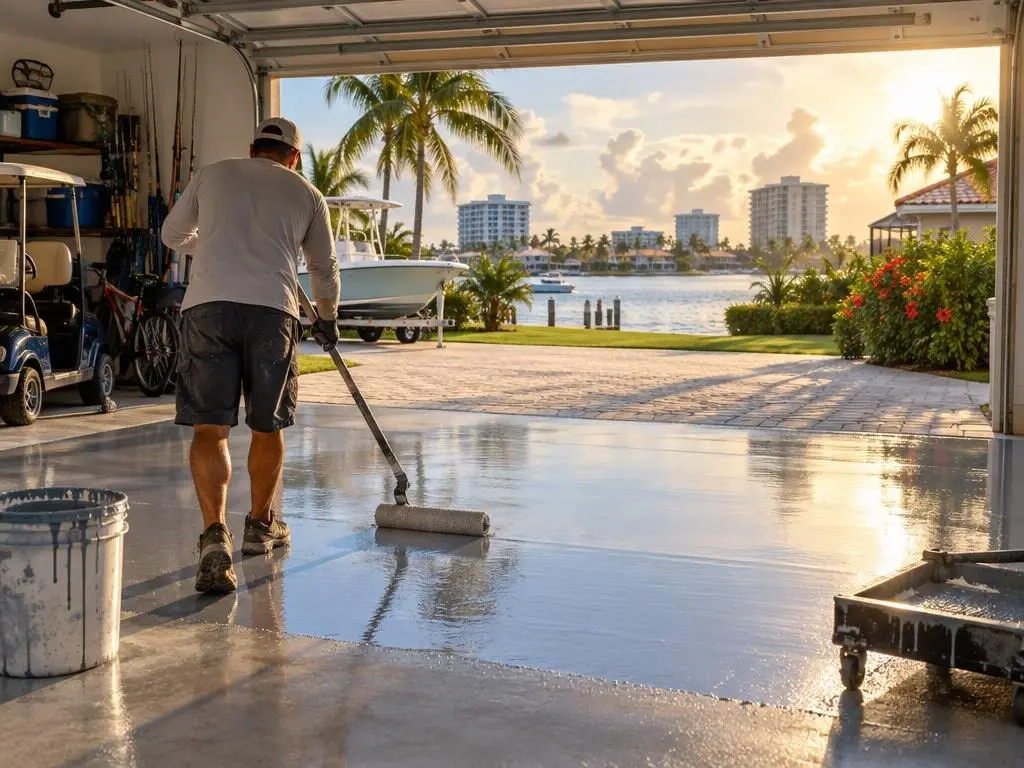
Typical Polyaspartic Coating Costs
| Item | Published range (source) |
|---|---|
| Polyaspartic, per sq ft | $5 to $12 (HomeGuide) |
| One-car garage | $1,400 to $4,700 (HomeGuide) |
| Two-car garage | $2,000 to $6,900 (HomeGuide) |
| Three-car garage | $2,900 to $10,400 (HomeGuide) |
| 500 sq ft floor | $2,500 to $6,000 (HomeGuide) |
| Per sq ft, alternate guide | $4 to $9 (Bob Vila) |
| Typical job, alternate guide | $1,440 to $3,240 (Bob Vila) |
Two national guides, two different ranges, and neither one is a bid. We price your floor after measuring and testing it, and the written estimate is the price for the work it lists.
How a Polyaspartic Job Runs
1. Estimate and test
We measure the floor, record a moisture reading and choose between a full system or a topcoat only.
2. Prep
Diamond grind, vacuum, crack repair and joint fill.
3. Check conditions
Slab temperature, humidity and dew point read before mixing.
4. Coat in batches
Small mixes applied in planned passes to avoid lap marks.
5. Fast return
We give you walk and parking times, often within a day or two.
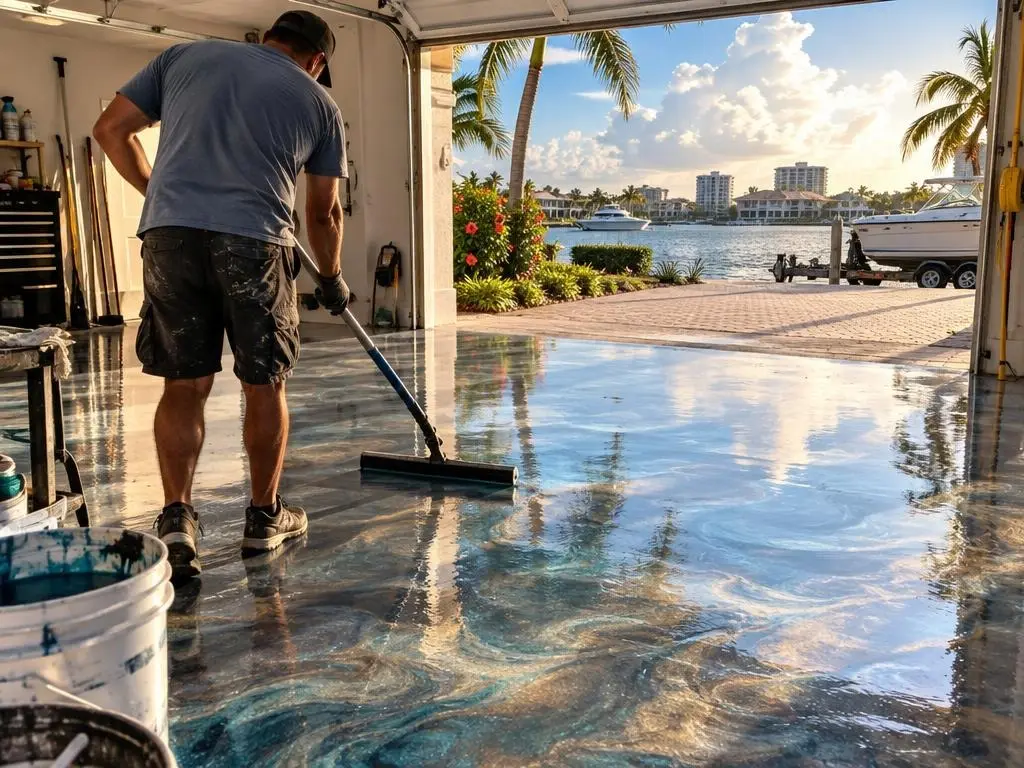
Why Choose Us for Polyaspartic Coatings
Crews sized to the floor
Fast-setting product needs enough hands to keep a wet edge.
Readings before mixing
Dew point and slab temperature are measured first so no moisture gets sealed in.
Honest comparison
We explain where epoxy, polyaspartic or a mix of the two fits your floor best.
Polyaspartic Coatings Questions
Is polyaspartic better than epoxy?
For sunny spots and quick turnarounds, often yes. HomeGuide gives polyaspartic an excellent UV rating against poor to fair for epoxy, and it cures in about one to two days. Epoxy builds thicker per coat, so many floors combine an epoxy build layer with polyaspartic on top.
What lifespan can I expect from a polyaspartic floor?
HomeGuide gives a lifespan of about 10 to 20 years or more. Prep, traffic and care make the biggest difference on any floor.
Can I put polyaspartic down myself?
Bob Vila's guide says it is not suited to DIY, mainly because it sets so quickly once mixed. In summer heat that window gets even shorter.
Does polyaspartic smell during install?
Some products have a noticeable odor while they are applied and curing. We can suggest lower-odor products, which helps in attached garages and condos, and we ventilate during the job.
Can polyaspartic go outdoors?
Yes. It is one of the better choices for lanais and patios because it holds up to UV. Outdoors we add texture for grip.
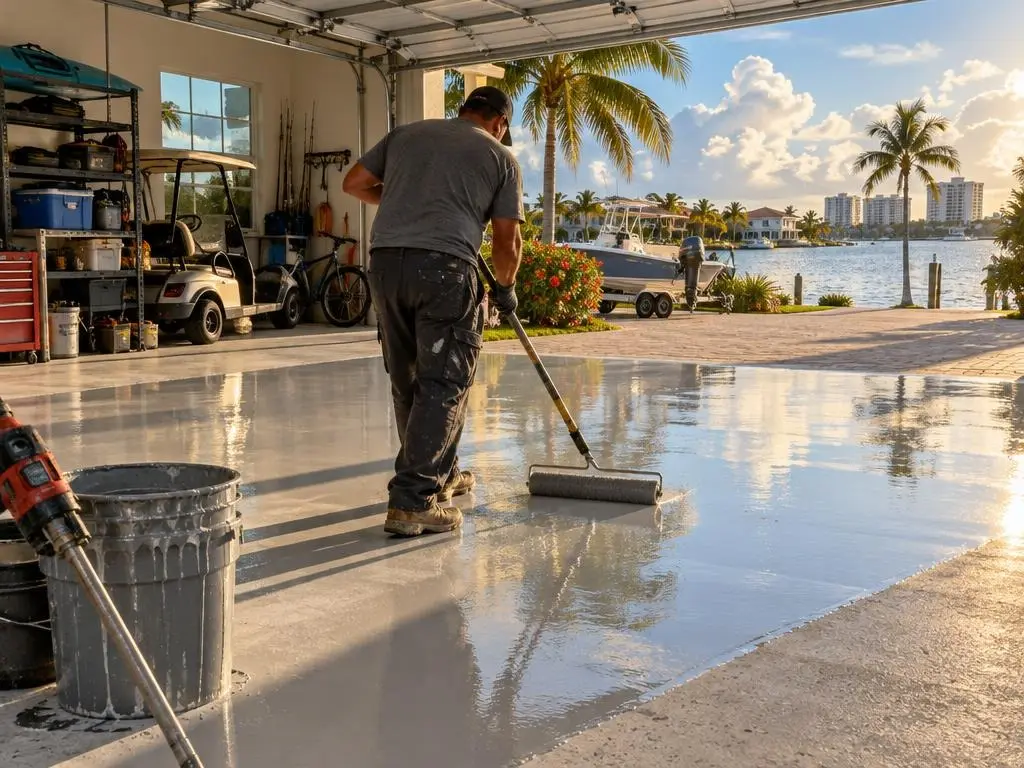
Polyaspartic Coatings Service Areas
- Epoxy Flooring in West Palm Beach, FL
- Epoxy Flooring in Palm Beach, FL
- Epoxy Flooring in Lake Worth Beach, FL
- Epoxy Flooring in Lantana, FL
- Epoxy Flooring in Boynton Beach, FL
- Epoxy Flooring in Delray Beach, FL
- Epoxy Flooring in Greenacres, FL
- Epoxy Flooring in Wellington, FL
- Epoxy Flooring in Royal Palm Beach, FL
- Epoxy Flooring in Palm Beach Gardens, FL
- Epoxy Flooring in Jupiter, FL
- Epoxy Flooring in Tequesta, FL
- Epoxy Flooring in North Palm Beach, FL
- Epoxy Flooring in Juno Beach, FL
- Epoxy Flooring in Riviera Beach, FL
- Epoxy Flooring in Lake Park, FL
- Epoxy Flooring in Palm Springs, FL
- Epoxy Flooring in Loxahatchee Groves, FL
- Epoxy Flooring in Westlake, FL
- Epoxy Flooring in Haverhill, FL
- Epoxy Flooring in Stuart, FL
- Epoxy Flooring in Hobe Sound, FL
Get a Polyaspartic Coatings Estimate
Free estimates on polyaspartic coatings for homes and businesses in West Palm Beach.